

St Peter’s Church partnered with Burnham Men’s Sheds to install handmade swift boxes on the church tower.
Wilder Churches
Wilder Churches is a partnership between BBOWT and the Diocese of Oxford aimed at anyone interested in managing churchyards with wildlife in mind.
The Diocese of Oxford covers much the same boundary as BBOWT. There are over 800 churches, many with churchyards, cemeteries or gardens, hence they represent a wonderful opportunity for wildlife.
Alison Riggs, Environment Action Delivery Co-ordinator for the Diocese of Oxford, shares some wildlife-friendly actions and local case studies in the video below.
Churchyards are often the oldest enclosed piece of land in a parish and so many, having avoided ploughing, still support a rich variety of wildflowers and wildlife. These habitats often act as valuable stepping-stones for wildlife through urban or agricultural landscapes.
Churchyards also hold a wealth of built heritage and local history and offer a tranquil space for peace and quiet reflection. The Diocese encourages churches to explore simple ways to enable their churchyards to be a haven for wildlife, heritage, and people.

Urban red fox cub (Vulpes vulpes) in a churchyard by Terry Whittaker/2020VISION
Wildlife in your churchyard
Find out more
Nature near you
Species mapInspiring stories
Churchyards are very special places that can be special for wildlife too. The churchyards of Chinnor United Parish are no exception, with volunteers in the Chinnor Churches Go Wild! group giving them a helping hand.
Each churchyard is unique and provides habitat for different plants and animals. Some have swifts nesting in the bell tower, while others have patches of long grass and wildflowers that are used by bees, butterflies and other pollinating insects. Small patches of rough ground, long grass, and compost heaps are perfect for slow worms and grass snakes, and the old trees in and around each churchyard provide food and shelter for birds, bats and many invertebrates.
Click below to listen to volunteers at St Mary's Church, North Leigh discuss their biodiversity management plan. This wonderful broadcast by Witney Radio FM tells of butterflies and bugs, cowslips and swifts, and a grass labyrinth used by hedgehogs!
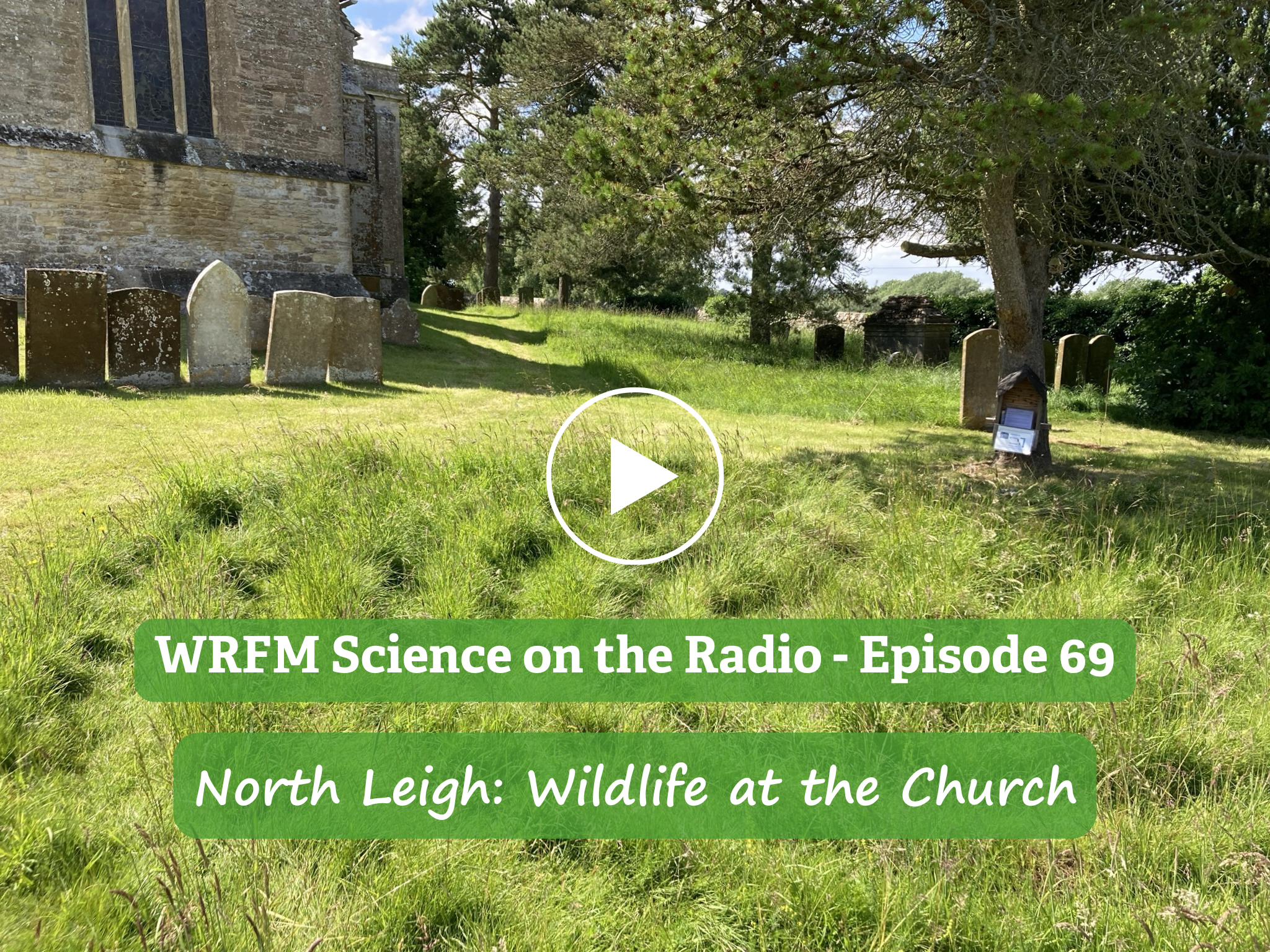
Nina Morgan of WRFM interviewed: Martin Crow, Harry St John and Clare Newgass (all from St Mary's, North Leigh) with Alison Riggs from the Diocese of Oxford's Environment Team. Find out more at northleighchurch.org/environment


Take action


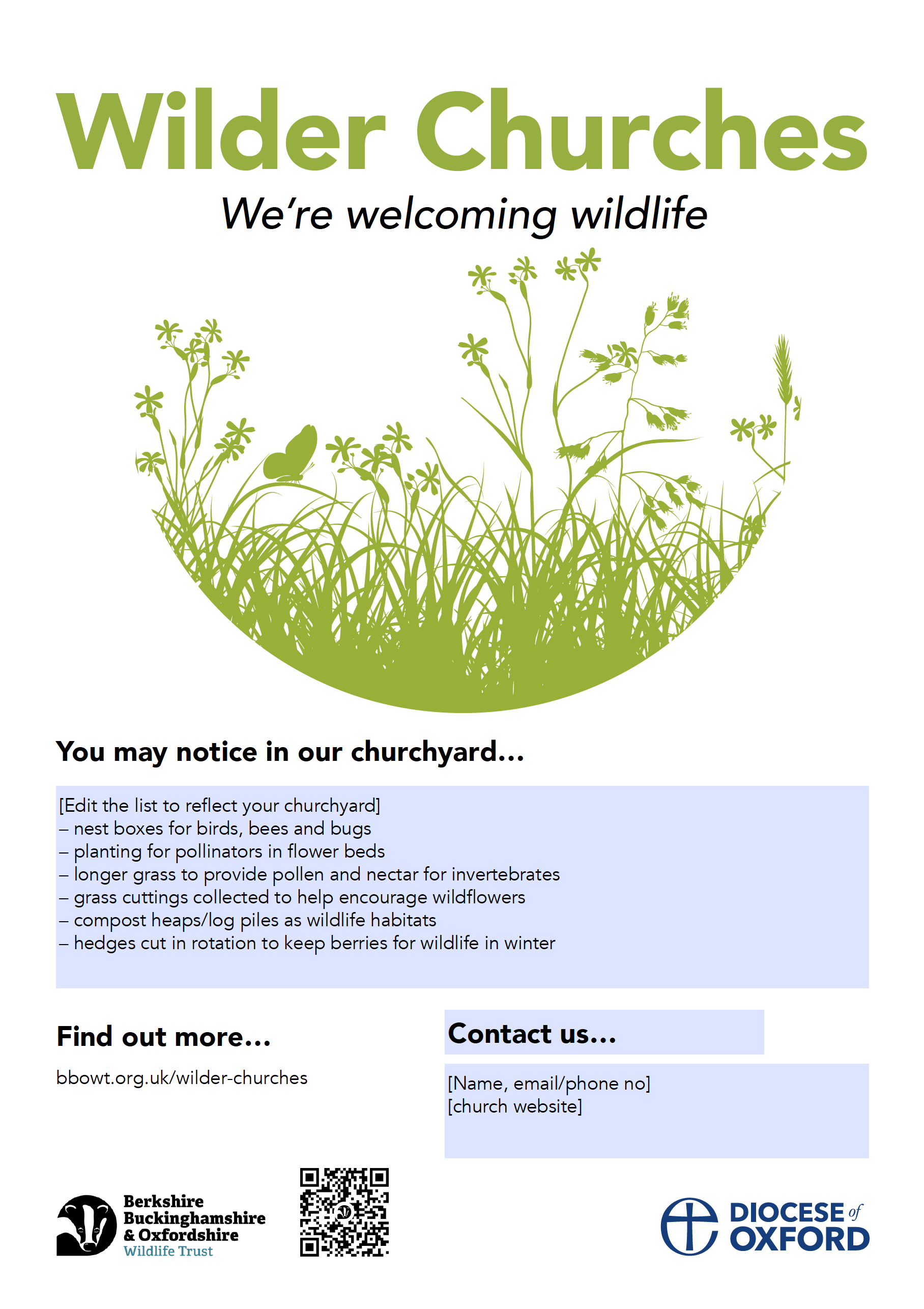
Wilder Churches poster
1. Click below to download the poster
2. Edit/delete text in the blue boxes
3. Print on paper or share by email
Want to do more?
The things we can do to look after wildlife in churchyards are also things you can do in your wider community, helping make more space for nature, everywhere.

Image credit: Austin Morley
I'm an individual
Make a difference
College Lake wildlife garden volunteer group. Picture: Paul Simmons
I'm part of a community group
Community actionSpecial thanks to